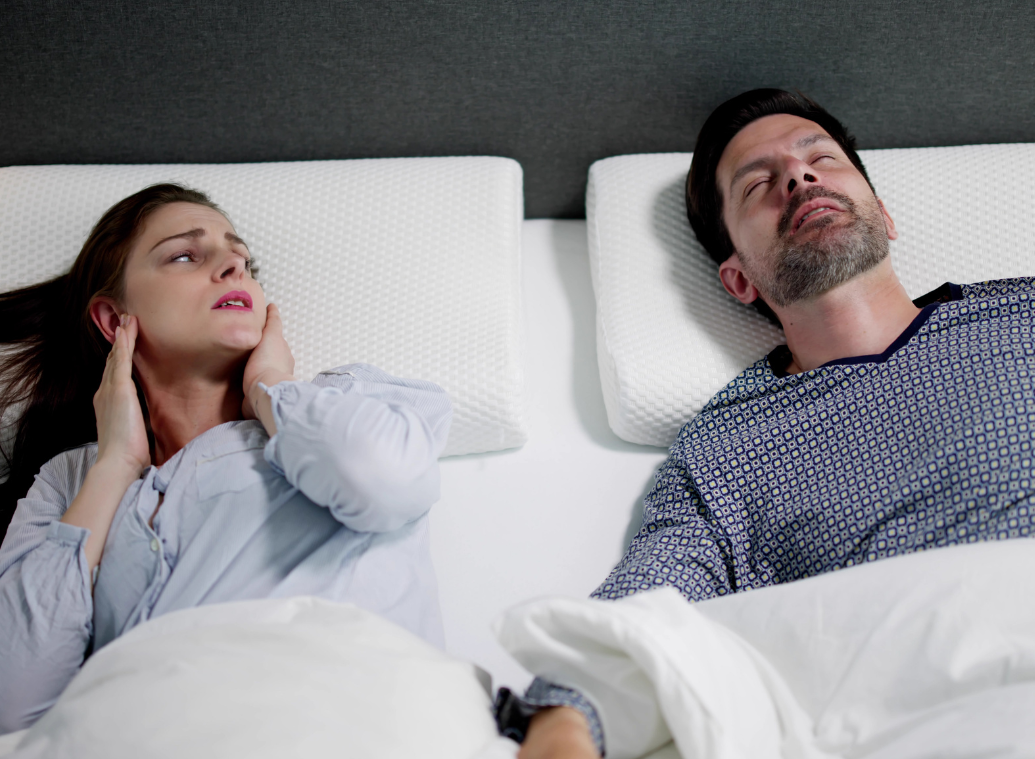






Sleep apnea and memory: What happens when your sleep keeps getting interrupted?
Published Dec 19, 2025 • By Somya Pokharna
Living with sleep apnea often means dealing with more than loud snoring or daytime fatigue. Many people notice something else creeping in over time. Forgetfulness. Trouble concentrating. A sense that their memory just is not what it used to be.
These changes can feel unsettling, especially when they affect work, relationships, or confidence. One of the key reasons behind them is something many people with sleep apnea are not even aware of: repeated micro-awakenings throughout the night.
Read on to discover what exactly micro-awakenings are and how they interfere with memory and brain health.

What is sleep apnea, in simple terms?
Sleep apnea is a sleep disorder in which breathing repeatedly stops and starts during sleep. The most common form is obstructive sleep apnea (OSA), caused by a temporary collapse of the upper airway. Central sleep apnea is less common and occurs when the brain does not send consistent signals to the muscles that control breathing.
Each breathing pause can last from a few seconds to over half a minute and may happen dozens or even hundreds of times per night. When this occurs, oxygen levels in the blood drop, and the body is forced to react.
Even if you do not fully wake up or remember these events in the morning, your brain and nervous system respond every time. Over the course of the night, this repeated stress adds up.
What are micro-awakenings?
Micro-awakenings are very brief interruptions of sleep, often lasting only a few seconds. You usually do not remember them at all.
In sleep apnea, micro-awakenings happen when oxygen levels fall and the brain triggers a protective response. It briefly wakes you just enough to tense the airway muscles, reopen the airway, and restore breathing. Once oxygen rises again, you drift back into sleep.
This cycle can repeat again and again throughout the night. While each awakening is short, the cumulative effect is significant. Sleep becomes fragmented, shallow, and less restorative, even if you spend plenty of time in bed.
Why is continuous sleep important for memory?
Sleep is not just passive rest. It is an active process during which the brain performs essential maintenance and organization.
During uninterrupted sleep, especially deep sleep and REM sleep, the brain:
- consolidates new memories
- strengthens learning from the day
- organizes information and skills
- clears metabolic waste products
- supports emotional regulation and attention
These processes depend on stable sleep cycles. When sleep is repeatedly broken by micro-awakenings, the brain is forced to constantly switch between sleep and alertness. Even if the total sleep time looks adequate on paper, the quality of that sleep is not.
How do micro-awakenings affect memory?
They interrupt memory consolidation
Memory consolidation is the process by which short-term memories are transferred into longer-term storage. This happens primarily during deep sleep.
Frequent micro-awakenings prevent the brain from staying in deep sleep long enough to complete this process. As a result, new information may not “stick” properly. People may find it harder to remember conversations, instructions, or things they learned the day before.
They reduce deep and REM sleep
People with untreated sleep apnea often spend less time in:
- slow-wave sleep, which supports factual and declarative memory
- REM sleep, which plays an important role in emotional memory, creativity, and problem-solving
When these stages are shortened or fragmented, memory formation becomes less efficient. Over time, this can contribute to a sense of cognitive slowing.
They impair attention and working memory
Micro-awakenings also affect how alert the brain feels during the day. Many people experience:
- difficulty focusing
- slower information processing
- trouble multitasking
- problems holding information in mind long enough to use it
This strain on working memory often feels like brain fog or mental exhaustion. Tasks that once felt automatic may suddenly require much more effort.
What is the role of drops in oxygen?
Sleep fragmentation is only part of the story. Repeated drops in oxygen levels also matter.
Low oxygen levels during apnea events can affect brain regions involved in memory, particularly the hippocampus. Over time, this may contribute to measurable cognitive changes, especially in people with severe or long-standing sleep apnea.
Some people describe this as feeling mentally “dulled” or less sharp than before. Importantly, this experience is not a reflection of intelligence or motivation. It is a physiological response to chronic sleep disruption and oxygen stress.
Is memory loss from sleep apnea reversible?
This is an important and hopeful question. For many people, treating sleep apnea leads to noticeable improvements in:
- attention
- concentration
- short-term memory
- mental clarity
Treatments such as CPAP therapy, oral appliances, weight management, or positional therapy can reduce micro-awakenings and allow the brain to return to more stable sleep patterns.
Improvement is not always immediate. The brain may need time to recover, and progress can be gradual. Consistency with treatment is key, and cognitive benefits often build over weeks or months.
Key takeaways
- Micro-awakenings are brief, repeated sleep interruptions that commonly occur in sleep apnea, even if you do not remember them.
- These awakenings fragment sleep and prevent the brain from spending enough time in deep and REM sleep, which are essential for memory.
- Memory consolidation, attention, and working memory are particularly affected, often leading to forgetfulness and brain fog.
- Repeated drops in oxygen levels may further impact brain regions involved in memory, such as the hippocampus.
- Treating sleep apnea can improve cognitive symptoms for many people, although recovery may take time and requires consistent treatment.
If you are living with sleep apnea and noticing changes in memory or concentration, your experience is valid. These symptoms are not “all in your head”. They are signs that your brain may not be getting the uninterrupted rest it needs.
If you found this article helpful, feel free to give it a “Like” and share your thoughts and questions with the community in the comments below!
Take care!
 Facebook
 Twitter
Sources:
Bardwell, W. A., Ancoli-Israel, S., Berry, C. C., & Dimsdale, J. E. (2001). Neuropsychological effects of one-week continuous positive airway pressure treatment in patients with obstructive sleep apnea: a placebo-controlled study. Psychosomatic medicine, 63(4), 579–584.
Beebe, D. W., & Gozal, D. (2002). Obstructive sleep apnea and the prefrontal cortex: towards a comprehensive model linking nocturnal upper airway obstruction to daytime cognitive and behavioral deficits. Journal of sleep research, 11(1), 1–16.
Bucks, R. S., Olaithe, M., & Eastwood, P. (2013). Neurocognitive function in obstructive sleep apnoea: a meta-review. Respirology (Carlton, Vic.), 18(1), 61–70.
Kushida, C. A., Nichols, D. A., Holmes, T. H., Quan, S. F., Walsh, J. K., Gottlieb, D. J., Simon, R. D., Jr, Guilleminault, C., White, D. P., Goodwin, J. L., Schweitzer, P. K., Leary, E. B., Hyde, P. R., Hirshkowitz, M., Green, S., McEvoy, L. K., Chan, C., Gevins, A., Kay, G. G., Bloch, D. A., … Dement, W. C. (2012). Effects of continuous positive airway pressure on neurocognitive function in obstructive sleep apnea patients: The Apnea Positive Pressure Long-term Efficacy Study (APPLES). Sleep, 35(12), 1593–1602.
Macey, P. M., Kumar, R., Woo, M. A., Valladares, E. M., Yan-Go, F. L., & Harper, R. M. (2008). Brain structural changes in obstructive sleep apnea. Sleep, 31(7), 967–977.
National Heart, Lung, and Blood Institute. (2025, January 9). What Is Sleep Apnea?. National Institutes of Health.
Rasch, B., & Born, J. (2013). About sleep's role in memory. Physiological reviews.
Rosenzweig, I., Glasser, M., Crum, W. R., Kempton, M. J., Milosevic, M., McMillan, A., Leschziner, G. D., Kumari, V., Goadsby, P., Simonds, A. K., Williams, S. C., & Morrell, M. J. (2016). Changes in Neurocognitive Architecture in Patients with Obstructive Sleep Apnea Treated with Continuous Positive Airway Pressure. EBioMedicine, 7, 221–229.
Walker, M. P., & Stickgold, R. (2006). Sleep, memory, and plasticity. Annual review of psychology, 57, 139–166.
Wilbanks, J. (2025, June 16). Obstructive Sleep Apnea. American Academy of Sleep Medicine.

1 comment

You will also like

Fighting Schizophrenia Symptoms: a Long Journey Against Paranoia after Denial and being Admitted
Dec 12, 2018 • 6 comments