





Obesity stigma: How to be kind to yourself when society shames your body
Published Mar 4, 2026 • By Somya Pokharna
Living with obesity is not only about health markers or numbers on a scale. It can also mean dealing with other people’s opinions, assumptions, and comments, sometimes daily. That social pressure can be exhausting, especially when it shows up in places that are supposed to feel safe, like healthcare settings, workplaces, or even among friends and family.
This article looks at how weight stigma can shape everyday life, why it hurts so deeply, and how to cope in a way that protects self-worth, because nobody deserves to live under constant judgment.
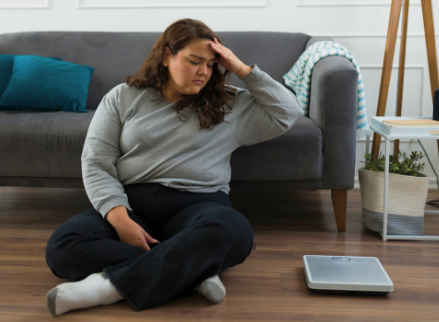
Obesity is a complex, chronic health condition where a person has excess body fat that may affect health. It is influenced by many factors, including genetics, hormones, medications, sleep, stress, environment, access to food, and social conditions. It is not simply a matter of willpower or “good choices.”
What does weight stigma look like in everyday life?
Weight stigma can be obvious, but it can also be subtle and easy for others to dismiss. For the person on the receiving end, it often lands the same.
It might look like:
- Direct comments or jokes about someone’s body, appetite, or “discipline”
- Unsolicited advice framed as concern, like “Have you tried cutting carbs?” or “I’m only saying this for your health."
- People assuming someone is lazy, unhealthy, less competent, or not taking care of themselves
- Social exclusion, like being overlooked in dating, friendship circles, or group activities
- “Polite” stigma, like backhanded compliments: “You have such a pretty face” or “You’d look amazing if you just lost a bit of weight."
- Everyday design barriers, like small seats, narrow spaces, limited clothing sizes, or awkward medical equipment
If any of this sounds familiar, it makes sense that it hurts. Humans are wired to seek belonging and safety. When the world makes someone feel “othered,” the nervous system notices.
Why do people judge body size so harshly?
A big reason is the story many societies tell about weight: that it is fully controllable and, therefore, a measure of someone’s character. When weight is framed as a simple result of choices, it becomes easy for others to turn it into blame.
But obesity is shaped by many forces that people do not see from the outside: biology, appetite regulation, hormones, medications, chronic stress, trauma, pain, disability, sleep disruption, food availability, finances, and more. Two people can eat similarly and move similarly and have very different bodies.
This is not about removing responsibility or ignoring health. It is about replacing shame with accuracy. Shame is not a treatment plan, and stigma is not a health intervention.
How can stigma affect mental health, identity, and relationships?
Stigma does not just create a bad moment. Over time, it can change how someone moves through the world.
Emotionally, people may experience:
- Shame, sadness, anger, or anxiety
- Feeling watched or judged in public
- A constant sense of “not being good enough”
- Low self-esteem or hopelessness
It can also affect identity. Some people start seeing themselves through the imagined eyes of others. They may anticipate rejection before it happens, rehearse what they will say if someone comments on their body, or avoid situations where their body feels “on display.”
Relationships can be impacted too. Someone might:
- Avoid dating or intimacy due to fear of rejection
- Pull away from friends because of embarrassment or fatigue
- Struggle to accept kindness or compliments
- Become a people-pleaser to “make up for” their body
None of this is weakness. Stigma is designed to land. It targets belonging, and belonging matters.
How can stigma affect health behaviors and healthcare experiences?
A painful part of weight stigma is that it can push people away from the very things that support health.
Some people avoid exercise spaces because they expect judgment or unwanted attention. Others skip social events, swimming, travel, or even routine healthcare appointments because the emotional cost feels too high.
Stigma can also shape eating behaviors. When someone feels ashamed, they may cope through comfort eating, binge eating, or strict all-or-nothing dieting. These are often survival strategies, not moral failures.
Healthcare can be especially complicated. People living with obesity sometimes report:
- Feeling dismissed or not taken seriously
- Symptoms being blamed on weight without proper assessment
- Being lectured instead of listened to
- Delaying care because they fear humiliation
If someone has had these experiences, it is understandable to feel guarded. Everyone deserves respectful care that looks at the whole person, not just their size.
What is internalized weight bias, and why does it matter?
When stigma is repeated enough, it can start to sound like an inner voice. This is sometimes called internalized weight bias. It is when a person begins to believe the negative stereotypes they have heard about people in larger bodies and applies them to themselves.
It can show up as:
- Harsh self-talk and self-blame
- Avoiding photos, mirrors, or certain clothes
- Cancelling plans because of body shame
- Feeling undeserving of care, pleasure, or rest
- Exercising as punishment instead of support
The goal is not forced confidence or pretending everything is fine. For many people, a more realistic goal is body neutrality and basic self-respect. It is learning to treat yourself like a human being who deserves dignity.
How can someone cope with stigma without being too hard on themselves?
Coping does not mean accepting mistreatment. It means protecting your well-being in a world that can be unkind.
Prepare responses to comments on your body
Having a few prepared lines can reduce the shock and keep you anchored. Some options:
“I’m not discussing my body.”
“I know you mean well, but that’s not helpful for me.”
“I’m focusing on my well-being, not my weight.”
“Please don’t comment on my food or my body.”
You do not owe anyone an explanation. Boundaries are not rude. They are protective.
Silence the harsh inner voice
When the inner voice is cruel, it often means a person is hurt, not that they are “lazy” or “weak.”
Try a small shift:
From “I’m disgusting” to “I’m having a hard moment, and I deserve care.”
From “Everyone is judging me” to “Some people judge, and that is about them. I still get to take up space.”
A simple question can help: “If someone I loved was feeling this way, what would I say to them?” Then try saying a version of that to yourself, even if it feels awkward at first.
Protect your spaces
Stigma is not only in people. It is also in content, environments, and routines.
- Curate social media. Unfollow accounts that trigger shame or moralize food and bodies. Follow weight-inclusive clinicians, dietitians, and communities that emphasize dignity and well-being.
- Wear clothes that fit now. Not “after.” Comfort is not something you have to earn.
- Choose movement spaces that feel safer. That might be home workouts, walking with a friend, water-based movement, or classes designed to be inclusive.
Reconnect with your body as an ally
Many people are told to treat their body like a project to fix. A gentler approach is to ask: “What helps me feel steadier today?”
That could be:
- More consistent sleep
- Managing pain and fatigue
- Supporting digestion
- Stress regulation
- Movement that improves mood or mobility
Health can be a goal. But it does not have to come through shame.
Find support that respects you
Support can make stigma feel less isolating. Options might include:
- A trusted friend who listens without trying to “solve” your body problems
- Peer communities where people understand the emotional load
- Therapy, especially if shame, anxiety, or disordered eating patterns are present
If healthcare has been difficult, it can help to:
- Write down symptoms and questions in advance
- Bring a supportive person to appointments
- Seek providers who practice weight-inclusive care if possible
- You deserve clinicians who take you seriously.
What can loved ones do to help without reinforcing stigma
For friends and family, support often starts with listening.
Helpful approaches include:
- Asking what kind of support is wanted: “Do you want advice, or do you want me to just be with you in this?”
- Avoiding weight-focused compliments or “motivation”
- Not commenting on food choices, even with good intentions
- Validating experiences of bias: “That sounds painful. I’m sorry you went through that.”
Sometimes the most healing thing is being believed.
Key takeaways
- Weight stigma is real and common, and it can affect social life, mental health, and healthcare experiences.
- Being impacted by stigma is a human response, not a personal failure.
- Coping can include boundaries, kinder self-talk, safer spaces, and support that respects dignity.
- Well-being does not have to depend on weight loss. Everyone deserves compassionate care and belonging.
If you found this article helpful, feel free to give it a “Like” and share your thoughts and questions with the community in the comments below!
Take care!
 Facebook
 Twitter
Sources:
Durso, L. E., & Latner, J. D. (2008). Understanding self‐directed stigma: development of the weight bias internalization scale. Obesity, 16(S2), S80-S86.
Nield, L., Oluwasina, I., & Snook, J. (2025). Living with obesity discrimination in the workplace: agenda for change?. People, Place and Policy Online, 19(1), 35-58.
Papadopoulos, S., & Brennan, L. (2015). Correlates of weight stigma in adults with overweight and obesity: A systematic literature review. Obesity, 23(9), 1743-1760.
Pearl, R. L., & Lebowitz, M. S. (2014). Beyond personal responsibility: Effects of causal attributions for overweight and obesity on weight-related beliefs, stigma, and policy support. Psychology & health, 29(10), 1176-1191.
Puhl, R. M., Luedicke, J., & Heuer, C. A. (2013). The stigmatizing effect of visual media portrayals of obese persons on public attitudes: does race or gender matter?. Journal of Health Communication, 18(7), 805-826.
Puhl, R. M., Phelan, S. M., Nadglowski, J., & Kyle, T. K. (2016). Overcoming weight bias in the management of patients with diabetes and obesity. Clinical Diabetes, 34(1), 44-50.
Ramos Salas, X., Forhan, M., Caulfield, T., Sharma, A. M., & Raine, K. D. (2019). Addressing internalized weight bias and changing damaged social identities for people living with obesity. Frontiers in psychology, 10, 442296.
Ratcliffe, D., & Ellison, N. (2015). Obesity and internalized weight stigma: A formulation model for an emerging psychological problem. Behavioural and cognitive psychotherapy, 43(2), 239-252.
Spahlholz, J., Baer, N., König, H. H., Riedel‐Heller, S. G., & Luck‐Sikorski, C. (2016). Obesity and discrimination–a systematic review and meta‐analysis of observational studies. Obesity reviews, 17(1), 43-55.