






Soluble vs insoluble fiber: Which is better for your gut?
Published Mar 9, 2026 • By Candice Salomé
We often hear that we should “eat more fiber” to improve digestion and protect our health. But not all fiber works the same way. Some types form a gel in the gut and feed the microbiome, while others act more like a mechanical "brush," helping to stimulate bowel movements.
Soluble and insoluble fibers have very different effects on digestion, bloating, blood sugar levels, and even chronic inflammation. Increasing your intake without understanding these differences can sometimes worsen symptoms instead of improving them.
In this article, we’ll break down the differences between soluble and insoluble fibers, explain how they act on digestion and inflammation, and help you identify which type may be better suited to your symptoms and individual needs.
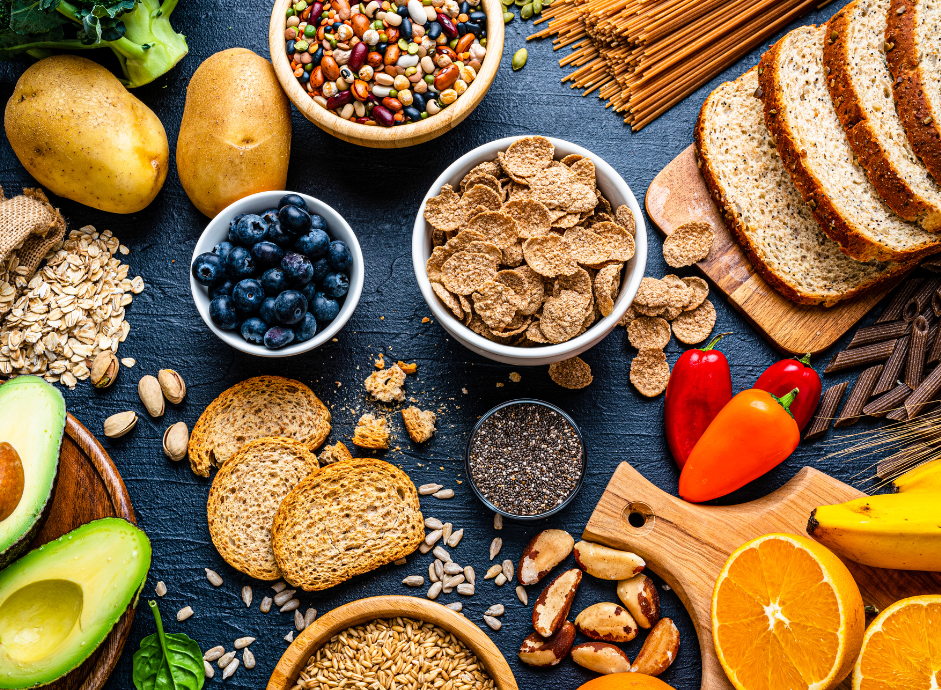
Soluble and insoluble fiber: What’s the real difference?
Fiber is a plant component that our bodies cannot digest. It therefore reaches the colon almost intact. But the way different fibers behave inside the body makes all the difference.
Soluble fiber: The kind that forms a gel
Soluble fiber, found in oats, legumes, chia seeds, apples, and psyllium, mixes with water and forms a gel-like substance in the stomach and intestines.
Imagine a sponge absorbing water and becoming thick and slippery. This gel slows digestion, which allows for:
- more gradual absorption of sugars
- better blood sugar regulation
- longer-lasting satiety
But its role doesn’t stop there. Once it reaches the colon, soluble fiber serves as food for beneficial gut bacteria.
Insoluble fiber: The “mechanical brush”
Insoluble fiber, found in wheat bran, whole grains, and certain vegetables, does not dissolve in water.
It acts like a mechanical “brush.” By increasing stool bulk and stimulating natural intestinal movement, it speeds up transit time.
This type of fiber is particularly helpful in cases of constipation linked to slow bowel movements.
How soluble fiber influences digestion
Soluble fiber has a subtler but deeper impact than insoluble fiber.
It slows digestion
By forming a gel, it slows stomach emptying. This helps prevent post-meal blood sugar spikes and reduces rapid hunger.
For this reason, soluble fiber is often recommended for people living with diabetes or metabolic syndrome.
It feeds the microbiome
In the colon, soluble fiber is fermented by intestinal bacteria. This fermentation produces substances called short-chain fatty acids, including butyrate.
Butyrate is particularly important. It directly nourishes the cells lining the intestine and strengthens the gut barrier. A strong gut barrier limits the passage of pro-inflammatory molecules into the bloodstream.
In simple terms, soluble fiber indirectly helps reduce chronic inflammation.
How insoluble fiber affects transit
Insoluble fiber plays a more mechanical role.
It increases stool bulk
By holding onto water and adding volume to digestive waste, it stimulates intestinal contractions. This allows waste to be eliminated more efficiently.
For people with constipation who do not have intestinal hypersensitivity, it can be very effective.
But it’s not suitable for everyone
In people with irritable bowel syndrome (IBS), insoluble fiber can sometimes worsen abdominal pain. Its mechanical “irritating” effect may increase discomfort.
In such cases, soluble fiber is often better tolerated.
Fiber and inflammation: A more important link than you might think
Low-grade chronic inflammation is involved in many conditions, including type 2 diabetes, cardiovascular disease, and obesity.
Here, soluble fiber plays a key role.
It reduces inflammation through the microbiome
The fatty acids produced when soluble fiber is fermented have anti-inflammatory effects. They influence immune cell activity and reduce certain inflammatory markers, such as C-reactive protein.
Several studies have shown that diets rich in fiber are associated with a lower risk of chronic inflammatory diseases.
It strengthens the gut barrier
When the intestinal wall becomes too permeable, bacterial fragments can enter the bloodstream and stimulate the immune system. This contributes to low-grade inflammation.
Butyrate produced from soluble fiber helps maintain the integrity of this barrier.
Insoluble fiber, by contrast, has a more indirect effect by speeding up waste elimination. Its anti-inflammatory impact appears to be less pronounced.
So, should you prioritize soluble or insoluble fiber?
The answer depends on your symptoms.
- In cases of simple constipation, insoluble fiber can help stimulate bowel movements.
- If you experience bloating, IBS, or chronic inflammation, soluble fiber is often better suited.
In all cases, fiber intake should increase gradually. A sudden increase can lead to gas and discomfort.
Ideally, a varied diet that includes both types of fiber (adjusted to your individual digestive profile) provides the best balance.
In summary,
- Not all fiber is the same.
- Insoluble fiber acts as a mechanical stimulator of bowel movements.
- Soluble fiber has a broader impact: it regulates digestion, feeds the microbiome, and contributes to reducing inflammation.
- Rather than simply trying to “eat more fiber,” it is more helpful to understand which type to choose based on your digestive needs and inflammatory profile.
If you found this article helpful, feel free to give it a “Like” and share your thoughts and questions with the community in the comments below!
Take care!
 Facebook
 Twitter
Comments
You will also like



Spoon theory: What is it and how can it help people living with chronic illness?
Apr 13, 2022 • 8 comments