






Skin burning after corticosteroids: how to recognize and relieve this little-known syndrome?
Published Jan 9, 2026 • By Candice Salomé
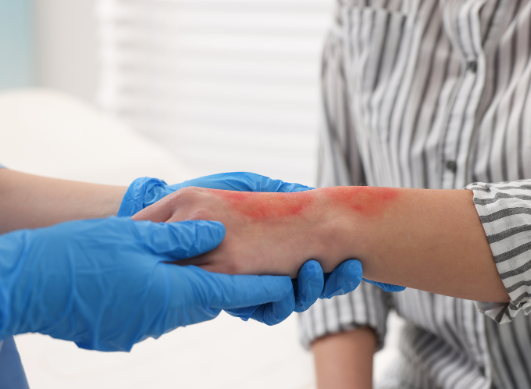
Red skin syndrome is a severe skin reaction that is often overlooked and can occur after long-term treatment or abrupt discontinuation of corticosteroids. Those affected experience intense redness, diffuse burning, and skin hypersensitivity, making daily life uncomfortable and sometimes painful.
But why do some skin types react this way to corticosteroids, and how can these symptoms be effectively relieved? Can this syndrome be prevented before it appears?
This article will help you understand this reaction, recognize the warning signs, and adopt best practices to protect your skin.
What is red skin syndrome?
Definition
Red skin syndrome, also known as red burning skin syndrome, steroid dermatitis, topical steroid rebound phenomena (TSRP), and topical steroid withdrawal (TSW), is a skin reaction associated with the use or withdrawal of corticosteroids. It differs from other skin conditions such as eczema or psoriasis in the intensity of the burning sensation and extreme skin sensitivity. This reaction can occur after both topical and systemic use of corticosteroids and is often underestimated.
When does it occur?
Red skin syndrome usually occurs after abruptly stopping corticosteroid treatment or after long-term use. Individuals with sensitive skin or a history of skin conditions are particularly at risk. Symptoms may appear a few days or weeks after discontinuing treatment, making it difficult to recognize without medical supervision.
Causes and risk factors
Long-term use of corticosteroids
Corticosteroids are effective at reducing inflammation, but long-term use can weaken the skin. The skin barrier becomes thinner, more fragile, and less resistant to external aggressions, which increases the risk of severe reactions such as red skin syndrome.
Withdrawal or sudden discontinuation
Suddenly stopping corticosteroids can trigger a rebound effect, causing redness, heat, and burning on the treated areas. The skin, accustomed to the anti-inflammatory action of corticosteroids, reacts excessively when they are withdrawn. Gradual withdrawal, supervised by a healthcare professional, is essential to limit the intensity of symptoms.
Other risk factors
Some people have more sensitive skin, while others have a history of skin conditions that predispose them to severe reactions. The combination of these factors with long-term corticosteroid treatment or abrupt discontinuation significantly increases the risk of developing red skin syndrome.
Symptoms to look out for
Redness and inflammation
The skin becomes very red and irritated, often in a diffuse pattern. This redness may be accompanied by warmth in the affected area and a burning sensation.
Burning and itching
Those affected describe an intense burning sensation, sometimes accompanied by severe itching. These symptoms can make everyday activities uncomfortable and affect sleep.
Fragile and irritated skin
The skin becomes extremely fragile, prone to flaking and irritation. With the skin barrier compromised, it reacts quickly to external factors such as friction or temperature changes.
Treatment and solutions to relieve the skin
Gentle care and hydration
It is essential to use gentle, moisturizing skincare products to restore the skin barrier. Repairing creams and certain oils can soothe the burning sensation and improve skin comfort.
Consultation with a dermatologist
A dermatologist can assess the condition of your skin and recommend a personalized treatment. In some cases, specific treatments may be prescribed to calm inflammation and help with healing.
Gradual withdrawal from corticosteroids
Gradually reducing the dose of corticosteroids under medical supervision helps limit the intensity of symptoms and prevent red skin syndrome. Patience and professional support are essential for optimal recovery.
Prevention and best practices
Limit long-term use of corticosteroids
Using corticosteroids only as prescribed by a doctor and for the recommended duration reduces the risk of skin conditions as side effects.
Follow medical advice
It is crucial to strictly follow your doctor's instructions for withdrawing or reducing treatment. Withdrawal too quickly can trigger severe red skin syndrome.
Recognize early signs
Quickly identifying the first signs of burning, redness, or skin fragility allows for early intervention and prevents symptoms from worsening.
Key Takeaways
- Red skin syndrome is a skin reaction associated with long-term use or withdrawal of corticosteroids.
- It manifests as intense redness, burning, itching, and skin fragility.
- Risk factors include long-term use, abrupt withdrawal, and individual skin sensitivity.
- Gentle care, moisturizing, and treatments prescribed by a dermatologist are essential for relieving the skin.
- Gradual withdrawal of corticosteroids reduces the intensity of symptoms and promotes recovery.
- Prevention requires strict adherence to medical instructions and early detection of signs of burning or skin fragility.
- Medical follow-up is essential for appropriate care and to avoid complications.
If you found this article helpful, feel free to give it a “Like” and share your thoughts and questions with the community in the comments below!
Take care!
 Facebook
 Twitter
Sources:
Topical corticosteroid withdrawal, DermNet
Topical Steroid Withdrawal (TSW), National Eczema Society
What Is Red Skin Syndrome (RSS), and How Is It Treated?, Healthline
Topical steroid withdrawal diagnostic criteria defined by NIH researchers, National Institute of Health
Que penser du syndrome de la peau rouge ou peau "en feu" ?, Pierre Fabre Eczema Foundation

Comments
You will also like

Spoon theory: What is it and how can it help people living with chronic illness?
Apr 13, 2022 • 8 comments

What is the psychological impact of chronic pain? Carenity members share their experience!
May 27, 2021 • 9 comments